
 POST-BURNOUT
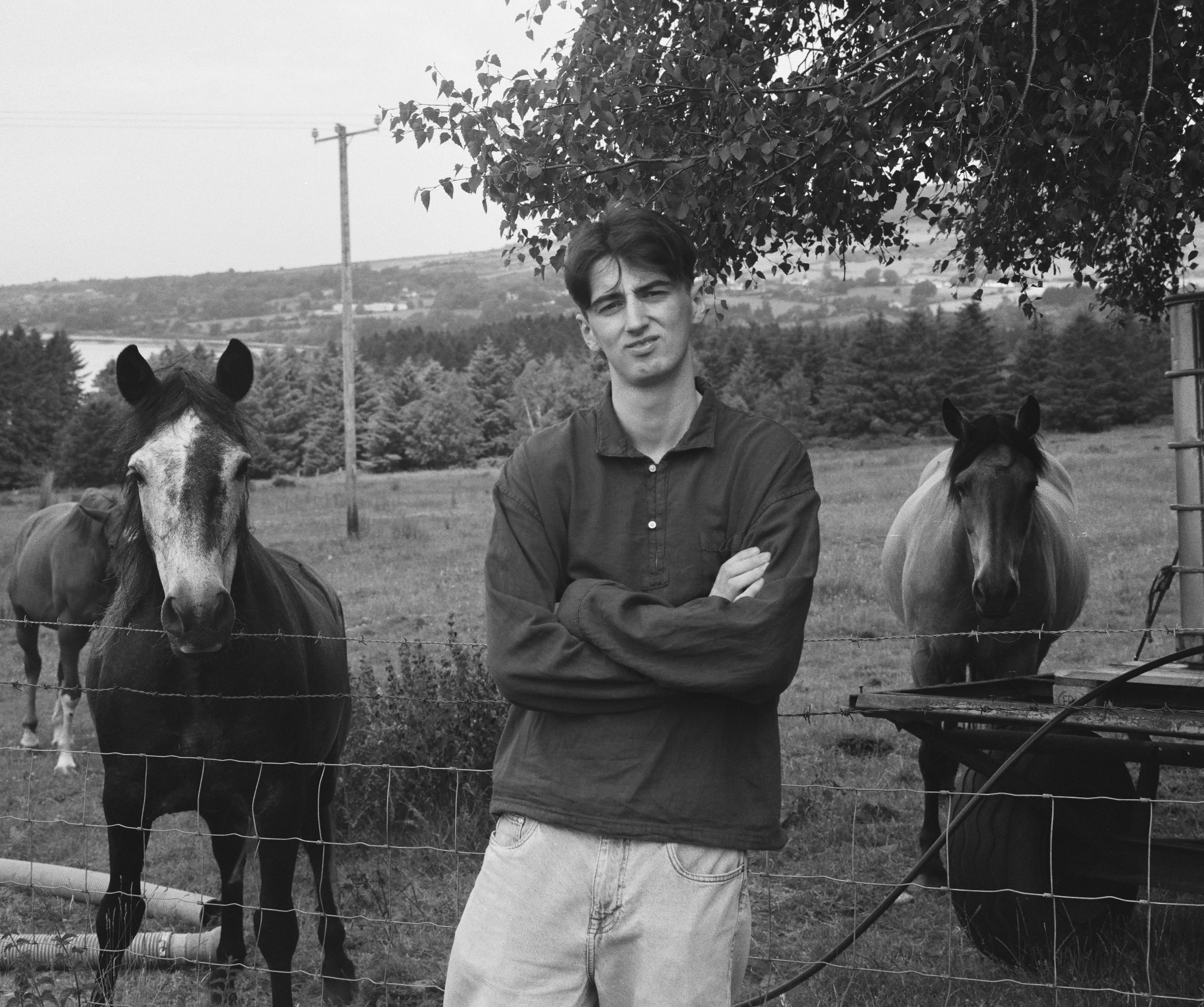
The story of Eoghan Daly’s music career began when he unwrapped an acoustic guitar one Christmas. At the time, his father had passed down his love of folk and country, but Eoghan was yet to find his own music.
“At the start, I was just learning other people’s songs, and then, for some reason, I thought I could do it,” Eoghan tells Post-Burnout of becoming a songwriter. “So, I started writing shit songs when I was in first year at school. Then I kept going. You have to be a bit delusional, I suppose, to think that I could do it.
“You have to go at it blindly, and you have to enjoy doing it, as well. Like, you can’t do it thinking that other people are going to hear it, I think. But, I suppose, at that age, you think that everybody’s going to hear it, and it’s going to blow up! [Laughs]”
While Eoghan admits that he “always wanted to present [his music] in an outward way,” in retrospect, he is grateful that his adolescent songbook never gained notoriety. In addition to the autodidactic novice quality of what he was crafting at that time, he also believes that he had not yet discovered the music that really impassioned him.
Courtesy of Eoghan Daly
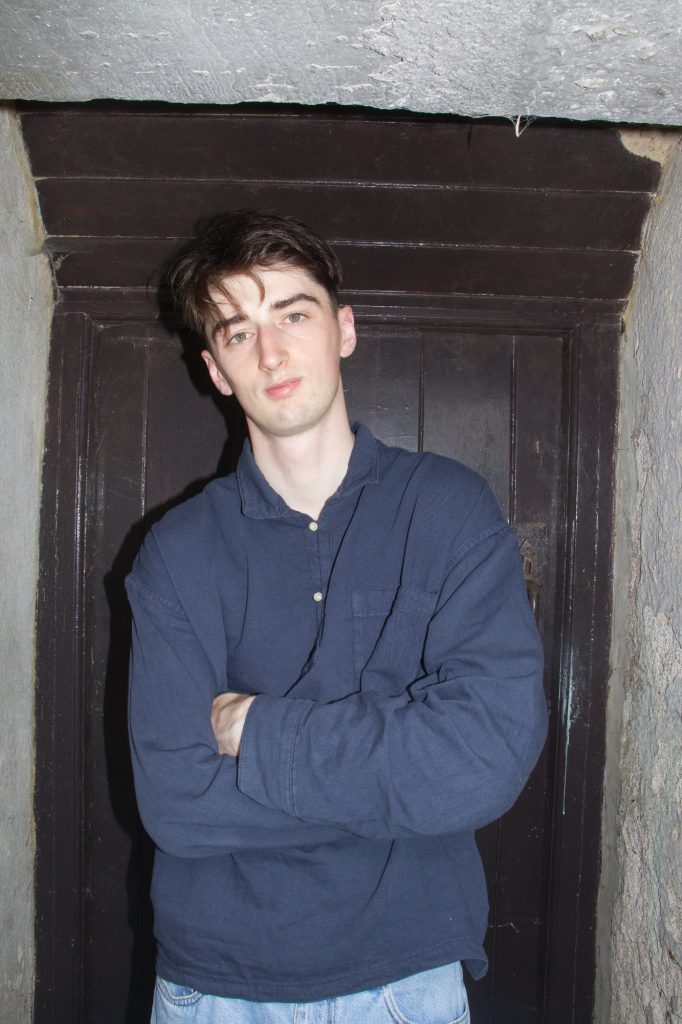
“The older I got, and as I developed more, I started listening to weirder stuff,” Eoghan explains. “I think I was just fed pop music when I was younger. Like, my Dad was into country music, and alternative country music, as well; like, he was into Townes [Van Zandt], and he brought me to see Steve Earle when I was really young.
“But my Mam and my Dad, they were definitely into pop music, and I think I was fed pop music, and that’s what I listened to when I was in secondary school, at the start. But, I dunno, I kind of just started listening to stranger songwriters, I think.
“Especially, going into college, I was listening to a lot of Silver Jews, David Berman, and things like that. Like, I got mad into The Magnetic Fields, as well, during college, and Stephin Merritt, and that kind of playful songwriting; the kind of songwriting where you listen to it, and you’re like, ‘I can kind of do anything now. There are no rules.’
“But, before that, I had a music teacher, Ms Fleming, in school, and she kind of recommended that I listen to The Felice Brothers, and I got mad into Ian Felice, and his songwriting and his poetry. I definitely think that I was guided in the right direction.”
With this new inspiration from cerebral, witty lyricism, Eoghan released some original material on SoundCloud in 2022 and began performing shows in Dublin, as he found few opportunities for original artists in his home county.
Despite currently not having any music released, Eoghan has already enjoyed a lot of success on the Irish music circuit, such as nabbing a coveted spot at Whelan’s Ones to Watch showcase, supporting the Corkonian folk singer-songwriter Rua Rí, and opening for the Killarney indie-folk musician Junior Brother. “I’ve definitely gotten lucky,” Eoghan acknowledges. “I know I’m lucky to have those experiences and have those gigs under my belt.”
After taking a break from music to do what he nebulously describes as “J1 things” in Chicago, and spending additional time in Germany, Eoghan returned home with a concept for a new piece that would define him as an artist.
Courtesy of Eoghan Daly
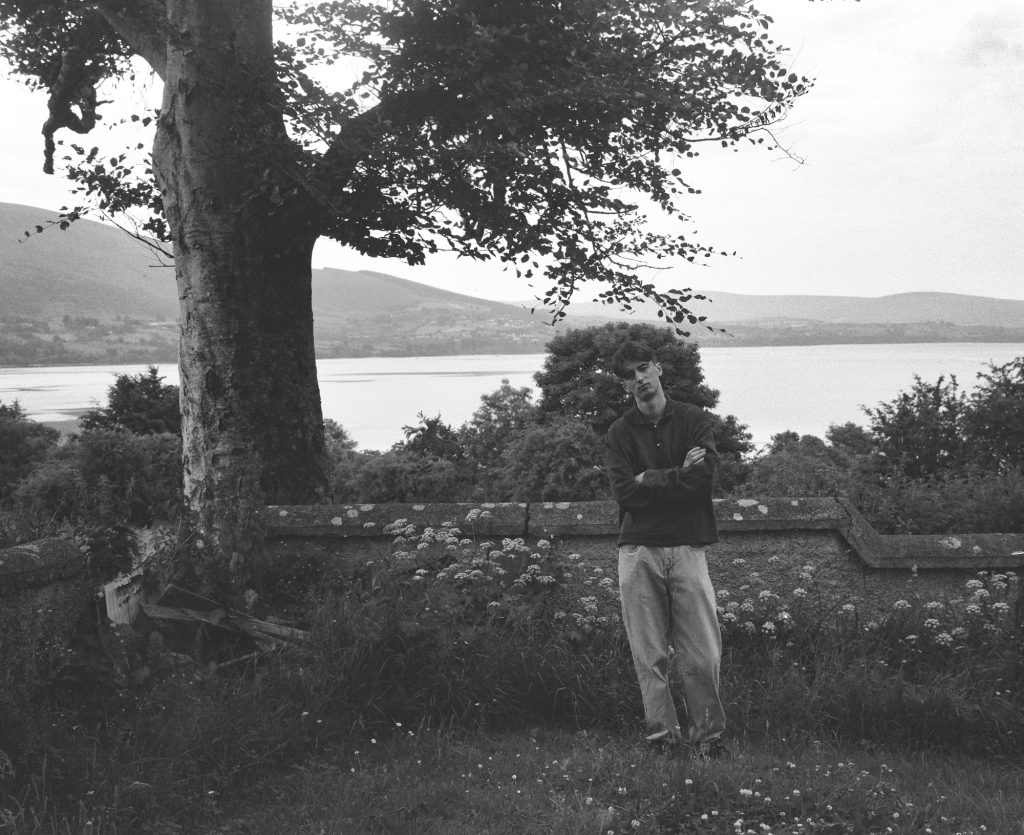
Compiling songs he began writing at the end of his college years, Eoghan’s new musical direction embraced some more mainstream artists than his unorthodox influences. “At that time, I was listening to pure Randy Newman and John Prine,” Eoghan recalls.
“Because I was only twenty or twenty-one…I think it’s hard when you’re a teenager, because you would kind of turn your nose up at people who are writing in a simple way that’s also humorous. I don’t think you can see that there’s a capacity for humour in songwriting when you’re thirteen or fourteen, because it’s very serious and you want to be taken seriously. I think songs by John Prine, like ‘Lake Marie’ and ‘Jesus the Missing Years,’ really changed the way that I thought about songwriting.”
Wanting to make a record that he describes as “Purple Rain from my bedroom,” Eoghan began recording some home demos of his new songs, whose origins spanned from 2023 to 2025. In the test production stages, he tried different techniques and equipment, such as MIDI keyboards and electronic drums, but after much trial, error and money, he found the best way to materialise his concepts was to play acoustically at home and mic it up. “It was always the sound I was happiest with, because it was the most natural thing I could make,” he says.
Despite being content with how the demos sounded, Eoghan realised that he would need professional guidance to truly realise his vision, and began scouting for producers. “I sent it to Conor O’Reilly, who’s in DUG, because I saw him open for The Felice Brothers, about three or four years ago,” Eoghan remembers.
“I messaged him after, just asking if I could send him a few songs, and he was really kind to me, and he invited me up to his house to play at a house show. He’s always just given me time for no reason, and I’ve always appreciated that.
“So, I sent him the songs, and he loved ‘Silver Lifer’ and ‘We’ll Never Make It to Dawson,’ and he was like, ‘I got this guy, Ben Rawlins, who’s after mixing and mastering my album, and I’m going to send these to him. I can’t promise anything, but I don’t think your songs are fully there yet; they just need a bit of mixing and mastering.’
“So, he sent them onto Ben, and, about twenty minutes later, he came back to me, and he was like, ‘Ben absolutely loves them!’, and he CC’d Ben in the email, and I had a few phone calls with Ben, and he mixed ‘Silver Lifer’ with me.”
But Eoghan’s ambitions lay beyond the aforementioned two songs that he had sent to Conor and Ben. Eschewing the new convention for release schedules (single, single, single, EP, single, single, album), Eoghan wanted to go straight into the last category.
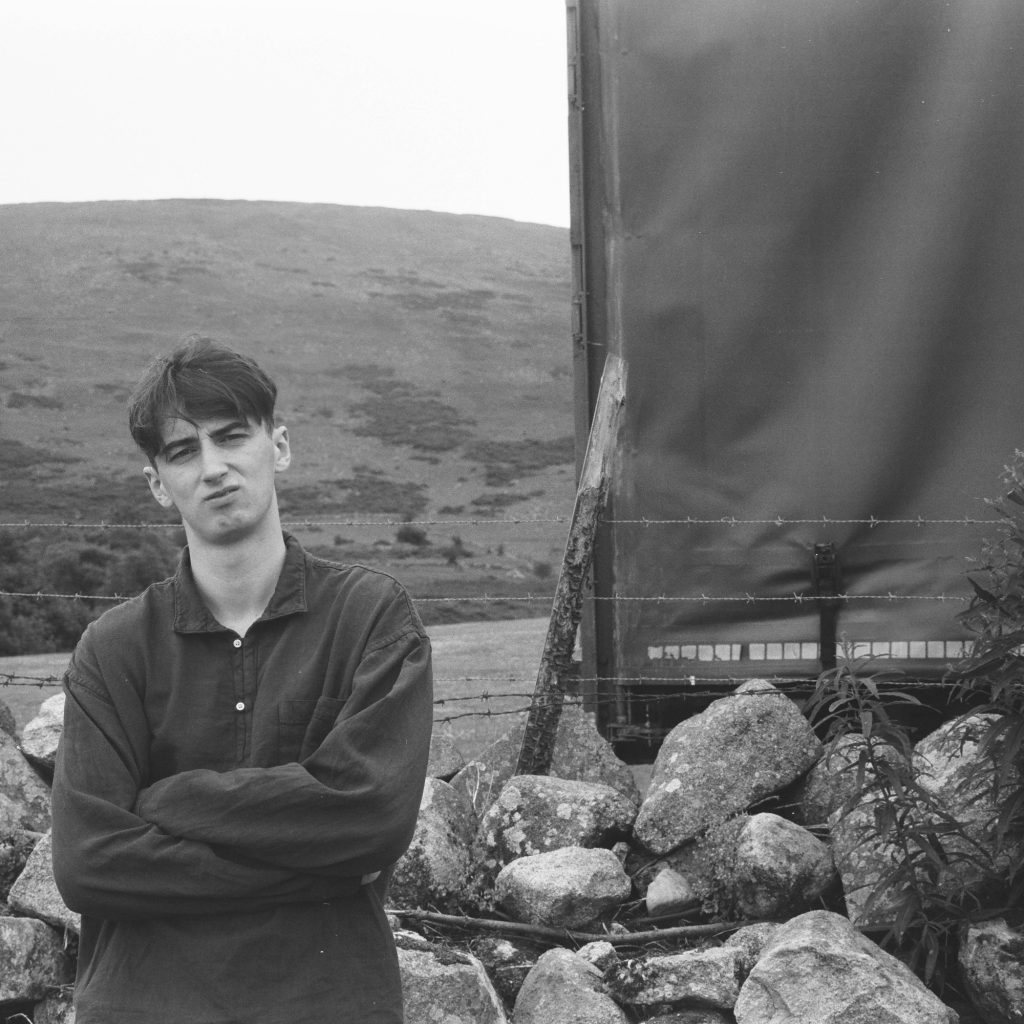
Courtesy of Eoghan Daly
“Unintentionally, I do think part of it was that no one else that I was really hanging around with or talking to was making albums; they were just focusing on singles and things like that,” Eoghan says, explaining his reasoning. “I just love albums. I just love the idea of an album. I’m interested in what you can do with an album, and what it can be.”
While Ben was initially sceptical about going full-force on a full release, he agreed after Eoghan convinced him of his vision. Soon, production on Eoghan’s debut album, Rural Gap, began. Explaining the title, Eoghan says, “I was writing a piece for college, and that was the name of one of the… – I won’t call them poems, because I don’t think they qualify as poems! – …but that was one of the pieces I wrote, and I did really like it. I just thought it was a good title, and, when I was putting the album together, it was just a working title I had for it.”
Gracefully, Eoghan’s EPK attach a genre label to his work, and while that may dissatisfy what Yahtzee Croshaw dubbed “The Invisible Pigeonholing Council,” Rural Gap is a bricolage concept piece, featuring elements of trad, folk, rock, electro, and even lullabies, which are allowed to be, at times, grand and epic, and, at others, minute and minimalistic.
Additionally, the music and lyrics are free-associative. “Angeles on Copper Pipes,” for example, begins with Eoghan’s sister saying, “And now, we pause for the Angeles,” before the sound of an item hitting off a copper pipe to the rhythm of the Angeles is heard. Or the album’s closer, “Amhrán Aoibhinn,” which is based on a mantra that Eoghan’s other sister used to repeat when she was three years old, backed by a swell of organs and precision that is simultaneously majestic and tinny.
“Over time, I just kind of added everything together,” Eoghan says of making a cohesive piece from disparate parts. “Once I had the basic structure of the songs, it was just about forming it into a way that made sense. Like, the first song, ‘Digger,’ I wrote that in about twenty minutes one summer. It just kind of fell out.
“But when I was playing live, I used that as a sean-nós-styleintro for another song I was playing. Then, I was recording it and messing around with it, and I was like, ‘No, this has to be its own song.’ It was just because I got to spend a lot of time messing around with the structure of what I wanted the album to be, and putting it together in my head. Probably too much time thinking about it, to be honest.”
In addition to its cold, windy, overcast atmosphere, another element that brings Rural Gap together is its parochial setting, inspired, in part, by Eoghan’s hometown of Blessington. “I’m definitely just interested in rurality,” Eoghan says.
“I think in Irish mythology, as well, it can be such a venue for uncanny things to happen. I think people expect the uncanny and the weird to exist in urban areas and in the city, because that’s where people are, but I think when it happens in rurality, it’s a bit more freaky and intense.”
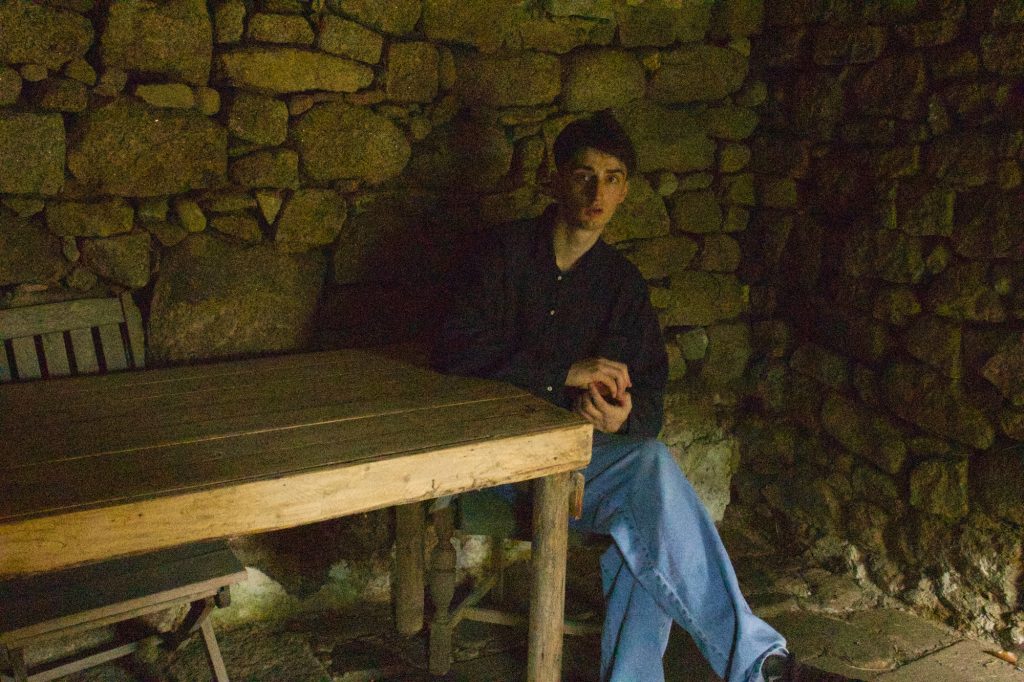
Courtesy of Eoghan Daly
When it comes to the lyrics, each song on Rural Gap is essentially a self-contained short story, written from a detached perspective. As an English graduate, Eoghan admits that he feels freer writing in the third-person. However, some of the album’s songs, specifically “Tarpaulin” and “Springsteen on Graham Norton’s Couch,” do draw on his own life experience.
“They’re kind of the inward songs on the album, where I’m talking about myself, but I think they’re the songs I’m most uncomfortable with, because I’m talking about myself, and I’m kind of just laying out things that have actually happened,” Eoghan says.
“I think they’re easy songs to write, because you’re not really making up a story; you’re trying to just recount something. So, it’s pretty easy to develop, because you’re just working off your memory, but they are the songs that I’m most uncomfortable with, because I’m part of the songs.
“I think the songs where I’m looking more outward are the songs that, in the future, I can have more enjoyment from. […] I think it can be very boring when people are just writing about themselves, sometimes. Like, my life is not that interesting! I can write more compelling songs about things that are going on elsewhere in the wider world.”
Rural Gap will be released on November 6th. Next week, Eoghan will perform a headline spot at Cullen’s in Ballyknockan to celebrate the release, with support from eyejust. In January, Eoghan plans to do a nationwide tour to support the album.
“I’ll have the odd gig here and there before the end of the year, hopefully,” Eoghan says of his upcoming live opportunities. “But, for album-specific shows, I’m going to do a few at the end of January. […] I don’t want to say too much, because I’ll be announcing it after the album, but definitely Dublin, and somewhere else, and maybe somewhere else! [Laughs] I’ll be up in the North, as well!”
Eoghan Daly’s debut album, Rural Gap, will be released on November 6th. You can keep up with Eoghan through his Linktree.
Eoghan will perform a launch show for the album at Cullen’s in Ballyknockan, Co. Wicklow on October 30th. It’s a free show with no tickets required. Support from eyejust.
Tune into POSTBURNOUT.COM Interviews… tonight to hear this interview in full. Available on YouTube, Spotify, Apple Podcasts, and Amazon Music Podcasts.
Aaron Kavanagh is the Founder and Editor-in-Chief of Post-Burnout. His writing can also be found in the Irish Daily Star, Buzz.ie, Totally Dublin, The GOO, Headstuff, New Noise Magazine, XS Noize, DSCVRD and more.