
 POST-BURNOUT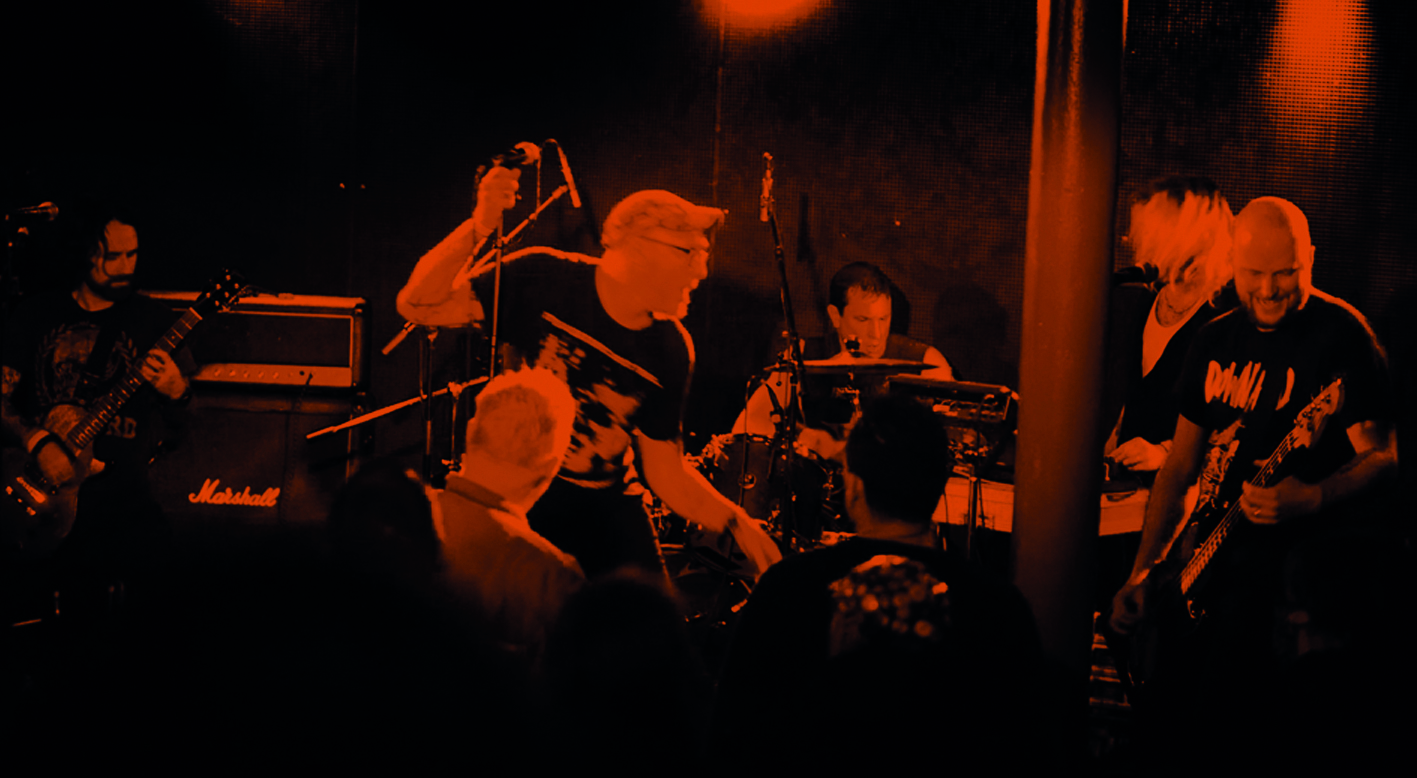
Growing up ensconced in the British punk scene of the 1980s, Jon Montague was interested in the D.I.Y. hardcore punk scene coming out of the States, as signified by labels like SST, Dischord, and Alternative Tentacles. Jon would buy copies of the Californian fanzine Maximumrocknroll to find out which LPs he should fork out the stupid import prices to own.
But living in the British West Country was not the ideal locale to see these acts live. Instead, on the European mainland, local punks were using defunct cultural centres to squat and host shows. Like Jon, they were also interested in seeing these American bands, so they built a pancontinental network of squats and brought them over.
Seeing this, Jon wanted in. “In the summer of 1988, I was seventeen, and I knocked on the door of the Van Hall squat in Amsterdam,” he recalls, when he spoke with Post-Burnout.“It was a huge old factory. I just knocked on the door with my mates, and said, ‘Can we stay here for the summer?’, and these Italian punks said, ‘Yeah!’, and gave us a set of keys, and that was it! That was us for the next four months!
During the summer, Jon worked the gigs at the Van Hall in lieu of paying rent and got to see a lot of U.S. punk and post-hardcore bands who were touring Europe, such as Fugazi, Scream, Rich Kids on LSD, and Christ on Parade, all within his first month there.
Throughout the nineties, Jon played in various bands, but it was the one he began and fronted in 2006, Seven Crowns, that would be his most successful and enduring. With socially-conscious and politically outspoken lyrics layered over music with elements from anarcho-punk, hardcore, thrash, and speed metal, Seven Crowns hit the ground running when they toured the U.S. with the British anarcho-punk legends Subhumans, within their first year of forming.
“We were lucky, because we’re from the same hometown as the Subhumans,” explains Jon, of how it happened. “I’ve known Dick [Lucas, their vocalist] and those guys since I was fifteen. So we just kind of asked them when they were drunk, ‘Can we come on tour with you in America?’, and they went, ‘Yeah,’ thinking we wouldn’t, and then we did! [Laughs]
“But we’ve done that a couple of times with the Subhumans. We invited ourselves to play with them in Singapore. We went to Singapore for a weekend. It seemed like a good idea six months before, [but] the reality of being at the airport and going, ‘Ah, fuckin’ hell! We’re going nine thousand miles for the weekend!’ [Laughs]”
In the lifespan of Seven Crowns, the band has toured across the UK, mainland Europe, North America, Asia, and New Zealand. But in recent years, they have decided to scale back their performances considerably for four main reasons: One, Brexit has made it harder to transport the band, merch, and equipment; Two, they tire more easily now; Three, the state of the United States; and Four, they don’t really enjoy touring the UK that much.
“We’re so glad we toured so much when we did,” says their drummer, Rob Clark. “Because we got it all in when we did it.” “How do you do it when you’re a band that is 19 or 20 years old?” questions their bassist, Nick Wilton. “I don’t know how those bands do that, now.”
But reduced touring means that the band have more time to write and record new music. They currently have a discography consisting of four albums and two EPs to show for their twenty years of existence.
The advancements in recording and production tech over the last twenty years are something that the band witnessed in real time. “Recording’s a lot easier, and it’s a lot faster, and it’s a lot cheaper,” Jon says. “We have the advantage that Josh [Gallop], who’s our sort of fifth member, who plays live with us, he’s also our producer. The kid’s a fuckin’ genius!”
Josh Gallop is a coveted producer from Bath who has worked with artists such as Krooked Tongue, Phoxjaw, Alf Hale, and Sargent Thunderhoof. Unlike the other members, who all have a shared history with punk rock, Josh’s more versatile and deviating interests and knowledge were a huge advantage to elevating Seven Crowns’ sound.
“I think the advantage is that he doesn’t come from the background that I, particularly, come from, or the rest of us do,” Jon says of working with Josh. “He doesn’t have that absolute nosebleed, old, hardcore background, so he doesn’t have any of the prejudices that come with that, production-wise. He’s not bothered that it doesn’t sound like it was done on SST in 1981!”
“He’s also a very competent musician himself,” adds Nick. “So, he can play guitar, keys, bass…He can probably play everything better than we can play it, actually. So, he understands each instrument and where it fits. So, he’s not just listening to a mix and saying, ‘Oh, what sounds good?’ He knows what works well, and when to draw it back a bit, or when to enhance.” “Yeah,” agrees their guitarist, Liam Baker. “He’s attuned to be able to see the bigger picture.”
Josh worked with the band on their latest album, Haunted Head, which was released last month. With a backlog of material to pull from, when it came to completing this record, the band say it took them four years, on-and-off.
In a time when the world was giving this outspoken band plenty of material to write about, the band instead focused on a more universal and long-lasting theme: Grief. “It was easy in the hardest way possible,” Jon says of writing the lyrics. “Over the three or four years that album was in gestation, a whole bunch of our friends and family died.”
It was when Jon’s wife lost her parents that he decided to take her on a trip to Panama, just to get away. While over there, they were accosted by some teenagers in a local gang. When Jon explained their reason for being there, he noticed their demeanours change, as they offered condolences, and truly realised the universality of their album.
“We sing about life, and how it affects us,” Jon says. “And the key thing overarching the past three years has, sadly, been bloody death. So, that’s where the album’s come from.” “And that’s how it ended up with a common thread,” adds Liam. “Despite the songs being distanced apart, they have that common thread.”
If you’re looking to listen to Haunted Head, you can find it on all streaming platforms…except Spotify. Dissatisfied by a myriad of issues, from artists not being properly compensated to investment in AI war tech, the band elected not to put their music on the streaming giant.
“Honestly, the biggest advantage we have is that we don’t give a fuck about fame or fortune,” Jon asserts. “Any of that is irrelevant. So, because of that, we can just do anything we want. And that’s what we’ve done: Anything we want.” “We don’t need to grow as much as Spotify needs to fuck off,” adds Liam.
We wrap the interview by asking the band if it has felt like they have been going for twenty years. “Yeah,” laughs Jon, before continuing, “Well, no. It did. When we were still touring a lot, it felt like we’d been together for 12,000 years. Now, we play live very rarely.
“We just treat it as a hobby. We’re not getting rich or famous. We don’t want to be rich or famous. We just enjoy doing. That’s how you can do it for twenty years, really; don’t put any pressure on yourself to do anything for anyone, really. As long as you’re happy to let everybody down, you’ll do alright in music!”
Seven Crowns’ latest album, Haunted Head, is out now. You can keep up with the band through their Bandcamp.
Tune into POSTBURNOUT.COM Interviews… tonight to hear this interview in full. Also available on YouTube.
Aaron Kavanagh is the Founder and Editor-in-Chief of Post-Burnout. His writing can also be found in the Irish Daily Star, Buzz.ie, Totally Dublin, The GOO, Headstuff, New Noise Magazine, XS Noize, DSCVRD and more.