
 POST-BURNOUT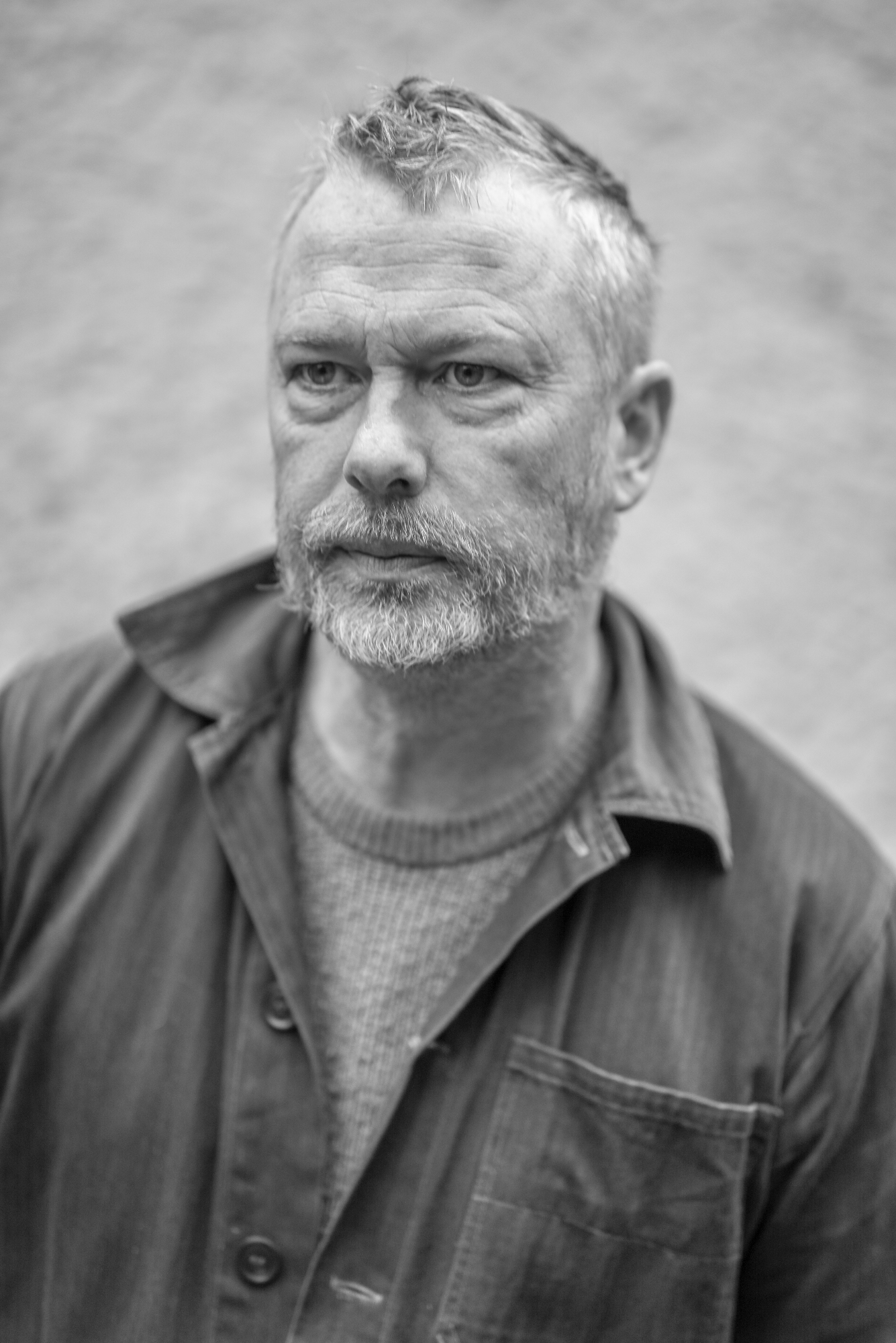
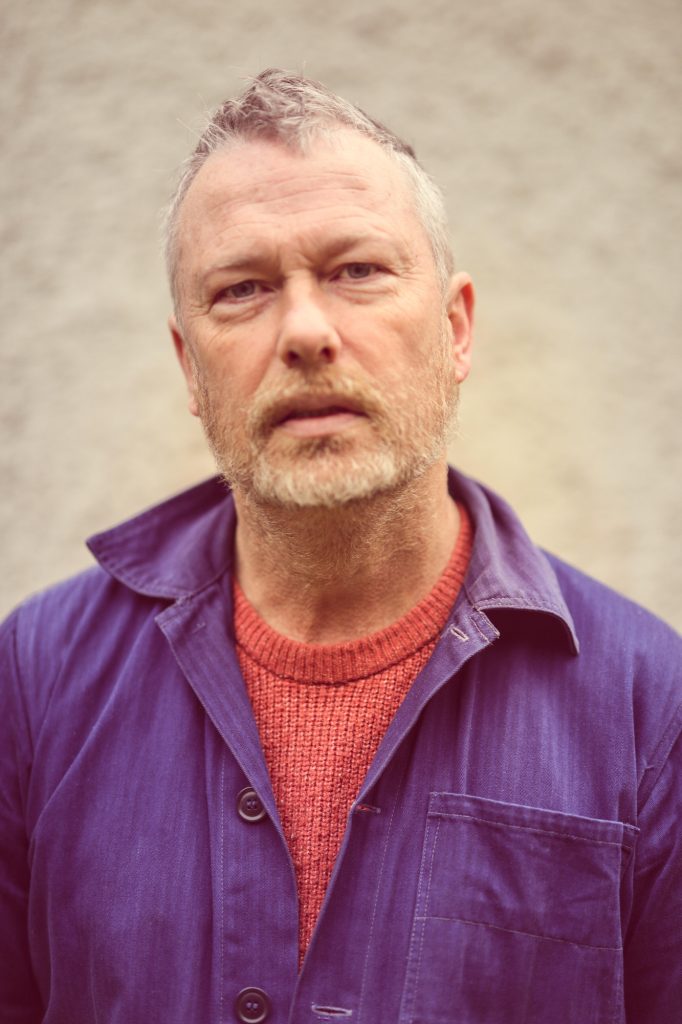
Coming from a working-class background on a council estate in Dublin, the folk singer-songwriter Mark Geary didn’t have the access or the resources to become a successful musician, but he did it anyway!
For over thirty years, Mark has written, recorded and released his own material, which has seen him tour the world, consistently release music for over twenty-four years, compose the soundtracks for various Hollywood releases, and collaborate with acts like The Cranberries, Elvis Costello, Bell X1, Glen Hansard, Coldplay, and Joe Strummer.
Yet, when Mark reflects on his career now, it’s hard for him to fully appreciate how much time has elapsed. “My kids tell me it’s that long,” he told Post-Burnout. “Or, when I’m talking about things, and they go, ‘Wait, you did what?!’ and ‘Where were ya?’ and ‘When the hell was that?!’
“I have a seventeen-year-old and a twenty-six-year-old, and I’m sure if I were talking to people when I was a teenager, what they were talking about would feel medieval or something. [Laughs] It doesn’t [feel that long] until, maybe, the kids of people who’ve been coming to see ya come to see ya!”
As a music-obsessed teen, Mark began learning to play the guitar, and eventually, moved to New York to live with his brother. But Mark insists that he didn’t move to the Big Apple with any intent of furthering his music career; in fact, he had given up on that by then.
“I was eighteen or nineteen,” Mark recalls of making the move. “I didn’t go to New York to pursue anything; I left Dublin to get the hell out of Dublin. I sold my guitars. I was definitely playing songs, singing with people, and I was writing.
“From a very, very early age, I had this idea…or maybe I had no thought…that I would write. [It] felt very natural to me. I didn’t have a conversation with anyone about, ‘Can you do this?’ or ‘Would you offer any advice?’, because there was no one to ask advice to, because I didn’t come from a musical background.”
Courtesy of Amplify Agency
It was only when Mark had left Ireland that he began resonating with the music of his homeland. “That’s what I leaned into, I think,” he recalls. “[I] was informed by an Ireland that I had been abandoned by. It’s kind of complicated.”
Living in the city’s bohemian East Village, Mark took jobs serving pizza and bartending, and organically became entranced by the surrounding art scene, which rejuvenated his passion for making music. Now writing as an expat in a city where he would feel quite out of place for several years, Mark was quite reticent to share this interest with others.
“I left on a one-way ticket,” Mark explains. “It was a desperate kind of move, because there was nothing really for me, or anything that interested me, in Dublin. I hadn’t found other musicians, or a band, or a [rehearsal space]. It was all a bit secretive. I didn’t know if I wanted to admit that I wrote songs.
“For most of the music thing, I’ve generally toured on my own. There was something quite precious about it. I had done [football and sports], but then there was this other Mark; a bit kind of Playboy of the Western World. A public and a private, you know?
“And this is me looking back, of course, but I do remember being quite secretive about it, because I wasn’t quite comfortable, or I didn’t want to fail. I just didn’t know how to navigate it, so I kind of kept quiet and asked a lot of questions. There were just lots and lots of musicians living in the East Village who had careers; who’d tour around the States, then come back, and then they’d be back, hanging out, smoking cigarettes, talking about music.”
When Mark started performing, he enjoyed a lot of success in the local scene, which eventuated in him signing to the Kentucky-based independent label sonaBLAST! (who, nowadays, are probably best known for Jack Harlow’s debut EP), and releasing his debut album, 33 1/3 Grand Street, which was written in the aftermath of 9/11, and released in 2002. This would lead to the career documented in our opening paragraphs.
Given the number of releases Mark has had in the twenty-four years since, we asked him whether his work feels like a documentation of his life. “It kind of makes me chuckle,” he responds. “It’s kind of a bit of my own history, and a bit of New York history.
“I don’t go back with the headspace of who I was then, but I must, inherently, feel it. You can think a thousand thoughts all at once. So, I remember where I was when I wrote it, and, because time has passed, my mother has passed, my dad, some sisters have passed, friends have died, friends have OD’d…terrible tragedies and disease, and yet, these little nuggets of songs and what was said feels even more pungent and more heartbreaking because I’m talking about somebody who’s left me.
“That’s what I noticed. And the song stays with me, so it’s new again, and I feel it. I get to sing it and feel it, which is really what you want. There’s a lot of songs that will just disappear on you. ‘How come you don’t do that song anymore?’ ‘I just don’t like it! [Laughs] There’s nothing in there, anymore! It did a thing! It’s like a Bic Mac meal…it did the thing, and I saw what it was, but there’s no nutrients to feed off of.’ That happens. That definitely happens. And the good ones just kind of hang around.”
In the late 2000s, Mark and his family moved back to Ireland, and are currently situated in County Kildare. With advancements in technology, Mark is now able to write, record, and produce music in his own back garden (which, funnily enough, is where he called in for his interview).
This freedom is what made his latest EP, Antebellum (which was released last month), come to life. “There’s a song on the EP called ‘Avalanche,’ that was really, really fast,” Mark recalls of making the record. “And I got my kid to sing along with me, and we recorded it together, and I thought, ‘God, wouldn’t it be amazing if you could record this, and release this in less than a month-and-a-half? Wouldn’t that be amazing to do?’
“So, I called the label in January, and I said, ‘Look, I’ve got scraps of paper. If you put a gun to my head and got me to really commit, I think I could knock this out really fast,’ and that’s what I did!
“Because it was January, and no one tours, and no one has money or whatever, so I was scrambling, like everyone else, to make some Shekels, but also, how lovely to be creative. To go, ‘OK, this is going to be my January.’ So, I knocked out Antebellum.
“[First] ‘The Harbor,’ and then they all started coming really, really fast. I’d get up in the morning, and [have] another song, or some little hook would be there, and I didn’t worry about edits, I didn’t worry about what I was trying to say. I love these songs. I can’t believe that I have six gorgeous new songs that I get to go sing now. That’s what I’ve been doing for the last month-and-a-half.”
Not only is Antebellum Mark’s quickest collection of songs to record and publish, but they may also be his most political. For the uninitiated, the term “Antebellum” is a Latin term that simply means “Before the war,” but, in a U.S. context, it is most synonymous with the American Civil War, which, depending on your source, was either a war fought to end slavery or to uphold “state rights.”
The people who feel it means the latter seem to adorn the current U.S. Presidential administration, who, through a rewriting of history, seem to have a lot of nostalgia for the antebellum. The EP as a whole, but especially the closer “Avalanche,” makes Mark’s position on this very clear.
“There’s a guy called Ken Burns, the documentary filmmaker, and, my God, there isn’t a documentary [of his] I haven’t watched!” Mark says of how the EP got its title. “He did one on the Civil War that’s so beautiful. He did one on Vietnam, baseball, jazz, the parks…incredible!
“So, I was kind of watching the world go on fire, and whatever, and I had been in Italy a lot, and I had these songs that…I always try to put an umbrella over my sentiment, even if it’s vague. I have an album called Opium, for example. Just something to point in the direction. And it looked beautiful as I wrote it down.”
When we spoke, the EP had been out for a week, so we wrapped by asking Mark how he felt about the reception it had received. “It’s been lovely,” he responded. “You can be burnt on that stuff. If you’re looking for the most amazing review, you’re setting yourself up for a bit of a kicking, so I don’t pay attention, just because I know what my head is like.
“Four o’clock in the morning, where you’re knackered, and you just remember some little phrase that someone said in passing that meant nothing, suddenly feels a bit juicier. So, the two impostors. An unbelievable review or a really lousy review, you just treat them absolutely the same.
“But, when I’m playing, and I’m singing, and doing the gigs, and selling the vinyl, and doing all of that, it’s been amazing. It’s been really positive and lovely, and people are very complimentary about that, but again, you keep that kind of, ‘Steady, lads! Steady!’ [Laughs]”
“It’s just better, because I didn’t write them for a compliment, I didn’t write them for a round of applause; I wrote them because I needed to write them, because I love writing songs, and it’s always a puzzle. I don’t know how to write a song until I write the songs. […] I’m always thrilled that there are great lyrics in them, there are great turns of phrase, or a poetic thing. That’s all I care about. I don’t give a shit about ‘What it’s supposed to do’ or whatever; I’m just thrilled that I do this!”
Mark Geary’s latest EP, Antebellum, is out now. You can keep up with Mark through his website.
Tune into POSTBURNOUT.COM Interviews… tonight to hear this interview in full. Available on YouTube, Spotify, Apple Podcasts, and Amazon Music Podcasts.
Aaron Kavanagh is the Founder and Editor-in-Chief of Post-Burnout. His writing can also be found in the Irish Daily Star, Buzz.ie, Totally Dublin, The GOO, Headstuff, New Noise Magazine, XS Noize, DSCVRD and more.